Showing posts with label faith. Show all posts

Wednesday, October 14, 2015

Back to you, Dieter


Dear Dieter,

Two years ago I started this blog because you recycled a mind-numbingly stupid slogan about how we needed to be aggressively critical towards our doubts instead of towards our faith. It's a slogan that suggests we should engage in self-censorship by turning a blind eye to unfavorable information. You suggest that ignorance is better than honesty. The fact is it's not.

In one of your talks earlier this month, you repackage the story of Daniel ("and other young students in Israel") in Babylon like it's the story of a young, enthusiastic Mormon headed off to a liberal university where he must resist the peer pressure to adopt the philosophies of man. "But Daniel believed. Daniel did not doubt." It's a clever move. It's also a very misleading juxtaposition. To suggest that today's higher education systems throughout the world are comparable to the vicious theocracy of King Nebuchadnezzar in which nonconformists are burned alive is, in a word, bizarre. Seriously, the Babylonian "team of scholars" (the Bible says "magicians and astrologers") has nothing to do with thousands upon thousands of highly trained researchers across the world who endlessly critique each other's work. Daniel, the Israelite captive carried off to be indoctrinated probably has more in common with young LDS missionaries than college students being pressured to binge drink with their fraternities and sororities.
Just think about it. I am, Dieter, and I think your analogy sucks. How much easier would it have been for Daniel to simply go along with the ways of Babylon? I don't know. I imagine he would have faced some pressure from his fellow Isrealites in captivity and I can't imagine how attractive the Babylonian belief system would have been, if at all. Please don't think that replacing one's belief system is easy. When a belief system is not yours, you're mostly likely going to think it's obviously ridiculous. He could have set aside the restrictive code of conduct God had given the children of Israel. He could have feasted on the rich foods provided by the king and indulged in the worldly pleasures of the natural man. Think of all the vile bacon he could have been eating! He would have avoided ridicule. I didn't see where in the book of Daniel it mentions ridicule. Can I get a verse on that?
He would have been popular. WTF? He was the prince of the eunuch's favorite and one of Nebuchadnezzar's top four councilors.
He would have fit in. Poor kid. At least the totalitarian king loved him. :S
His path might have been much less complicated. Had he just drank the Kool-aid, er... wine...
As silly as your talk is up to this point, it's outdone in the next section where you blame it all on Satan and shame people who are skeptical or have doubts.
Satan, our adversary, wants us to fail. Satan is an early Christian invention, not an actual spirit being. He spreads lies as part of his effort to destroy our belief. What lies? That Joseph Smith had a history of making shit up to get money out of people starting from his early teens? That he plagiarized and falsified rather than actually translate? That he cheated on his wife many, many times and tried to exonerate himself with a fabricated revelation? He slyly suggests that the doubter, the skeptic, the cynic is sophisticated and intelligent, while those who have faith in God and His miracles are naive, blind, or brainwashed. No, that's not Satan, that's logic. Satan will advocate that it is cool to doubt spiritual gifts and the teachings of true prophets. No one's doubting because it's "cool", you asshole! People doubt because they see various inconsistencies in the theory of spiritual gifts and the teachings of those claiming to be prophets. Most of us don't go hunting for them; they arise naturally throughout the years of indoctrination. Right now you sound like the type of person who would claim fossils were put on earth by Satan to deceive us.
And now for the token quote from this train wreck of a prophetic message - the part where you call doubters ignoble, unimpressive, lazy, morally weak, disloyal and cowardly.
Brethren, let me be clear: there is nothing noble or impressive about being cynical. Skepticism is easy—anyone can do it. It is the faithful life that requires moral strength, dedication, and courage. Those who hold fast to faith are far more impressive than those who give in to doubt when mysterious questions or concerns arise.
Who the fuck do you think you're fooling? First off, don't conflated cynicism for skepticism. Now let me show you the other side:
  
Following your family, your friends and your community in their beliefs is easy. It's great having everyone around you be in constant agreement because they think like you do. It's very hard when you don't share the beliefs of your community and you live your life as an outsider. Your kids might even have a hard time finding friends whose parents will let them come over to play. But it is the sincere life of inquiry and careful judgement that requires moral strength, dedication and courage! Those who hold fast to integrity of thought and open-mindedness are far more impressive than those who allow their family or the geographical location in which they were born to provide a prepared set of default answers to questions or concerns about your worldview.

You end your talk with the horrible idea that we simply choose to believe because somehow that will make all the absurdities of the LDS history and doctrine magically disappear. You're asking us to shut off our brains, to stop thinking. Most people can't do this. Most people will struggle silently with cognitive dissonance, will wear out their knees praying for answers, will hate themselves for not understanding and not getting any divine enlightenment. Others will have the courage and good sense to accept the reality of life on earth and walk away from the Church.

Dieter, you should be ashamed of yourself. Your talk will hurt thousands of people who are struggling to make Mormonism work somehow. My only consolation is that the only reason you gave this talk in the first place is because so many people are leaving the Church. You're desperate. You can't defend the Church with facts, so you attack the people who have seen the facts. How cowardly of you.

Sunday, October 11, 2015

Dale Renlund criticized

The most lowly of the new LDS apostles is Dale Renlund. It's time we consider his witness of Jesus as offered earlier this month.


My dear brothers and sisters, thank you for sustaining me yesterday as a member of the Quorum of the Twelve Apostles. I didn't. I'm not sorry. It is hard to express how much that means to me. Are you going to try? I was especially grateful for the sustaining vote of the two extraordinary women in my life: my wife, Ruth, and our dear, dear, dear daughter, Ashley. You didn't try to express how much being sustained means to you. Hi, Ashley, you little dear you!!!

My call gives ample evidence to the truthfulness of the Lord’s statement early in this dispensation: “That the fulness of my gospel might be proclaimed by the weak and the simple unto the ends of the world.” Right, because nothing screams "weak and simple" like a white dude from the United States with a top education and a healthy income as a cardiologist and professor. :S I am one of those weak and simple. Um... maybe "weakling" and "simpleton", but let's not pretend you've been dredged up from the lowly of the low. Decades ago, when I was called to be the bishop of a ward in the eastern United States, my brother, slightly older and much wiser than I, called me on the phone. You're really hammering away at the false humility bullshit and you only just started. In the words of Dieter: STOP IT! He said, “You need to know that the Lord hasn’t called you because of anything you have done. The bishop called you because you insisted you don't look at porn or cheat on your wife. In your case, it is probably in spite of what you have done. We all know you touch yourself sometimes. The Lord has called you for what He needs to do through you, and that will happen only if you do it His way.” He needs you to avoid counseling people and refer them instead to professionals. I recognize that this wisdom from an older brother applies even more today. Definitely. Now that you're in the big time you're probably going to start thinking you're way hot shit. Remember, you're a cardiologist, not someone channeling the mind and will of Jesus for the masses.

Something wonderful happens in a missionary’s service when he or she realizes that the calling is not about him or her; rather, it is about the Lord, His work, and Heavenly Father’s children. You're God's little pawn and it's beautiful. I feel the same is true for an Apostle. It probably is about the same. This calling is not about me. It had nothing to with your close vicinity and sucking up to the hierarchy? It’s about the Lord, His work, and Heavenly Father’s children. Let's see what you can do to increase the Church's spending for the homeless and hungry rather than real estate and city development. No matter what the assignment or calling is in the Church, to serve capably, one must serve knowing that everyone we serve “is a beloved spirit son or daughter of heavenly parents, and, as such, … has a divine nature and destiny.” Well, not everyone. Some beloved spirit children are destined for something less than divine. Most actually. But don't worry, God loves you lots.

In my past profession, I was a cardiologist specializing in heart failure and transplantation, with many patients who were critically ill. How lowly! :S My wife jokingly says that it was a bad prognostic sign to become one of my patients. Your wife's not very funny. All teasing aside, I saw many people die, and I developed a kind of emotional distance when things went poorly. What a horribly segue. You really are a calloused man. That way, feelings of sadness and disappointment were tempered.

In 1986 a young man named Chad developed heart failure and received a heart transplant. Oh lord. Is this a story about how you cried once back in 1986?! He did very well for a decade and a half. Chad did all he could to stay healthy and live as normal a life as possible. He served a mission, worked, and was a devoted son to his parents. What does "devoted to his parents" mean? The last few years of his life, though, were challenging, and he was in and out of the hospital frequently. So he did died. Did you cry?

One evening, he was brought to the hospital’s emergency department in full cardiac arrest. My associates and I worked for a long time to restore his circulation. Finally, it became clear that Chad could not be revived. We stopped our futile efforts, and I declared him dead. Although sad and disappointed, I maintained a professional attitude. I thought to myself, “Chad has had good care. He has had many more years of life than he otherwise would have had.” Yes, he did have many more years... THANKS TO MEDICAL SCIENCE, not a miracle. That emotional distance soon shattered as his parents came into the emergency room bay and saw their deceased son lying on a stretcher. In that moment, I saw Chad through his mother’s and father’s eyes. I'm not sure how you can claim you saw him through their eyes, but empathy is a beautiful thing so whatever. I saw the great hopes and expectations they had had for him, the desire they had had that he would live just a little bit longer and a little bit better. Sad. With this realization, I began to weep. Ah-ha! This story is about you crying! Lovely. I'm feeling the Spirit now! :S In an ironic reversal of roles and in an act of kindness I will never forget, Chad’s parents comforted me. And it was awkward as hell for them.

I now realize that in the Church, to effectively serve others we must see them through a parent’s eyes, through Heavenly Father’s eyes. This is the god who saw fit to exile a full one third of his spirit children eternally and exile the other two thirds for some kind of poorly thought out test. Those involved in the test have seen their father do strange things. He drown 99.99% of them one day, ordered genocide another, has left and continues to leave millions upon millions to suffer sicknesses and various calamities, and has never even sent a prophet or Mormon missionary to explain why it was all happening to the vast majority of his children on earth. I'll tell you now, as a parent, I cannot relate to this being. Only then can we begin to comprehend the true worth of a soul. This god sells life cheap. Only then can we sense the love that Heavenly Father has for all of His children. Only then can we sense the Savior’s caring concern for them. His unconditional love requiring baptism and full conformity to his arbitrary set of rules? We cannot completely fulfill our covenant obligation to mourn with those who mourn and comfort those who stand in need of comfort unless we see them through God’s eyes. Can you imagine what it would be like to see what God sees? Everything that is, ever was and will be all at the same time! Talk about a headache. This expanded perspective will open our hearts to the disappointments, fears, and heartaches of others. God is perfect - he's whole and complete - why would he be vulnerable to disappointment, fear and heartache? But Heavenly Father will aid and comfort us, just as Chad’s parents comforted me years ago. Of course he'll craddle us and tell us it's OK that Jesus died, he's the one who ordered him dead in the first place. The difference is that God got his son back in a few hours, Chad's parents are still dealing with their son's absence to this day. We need to have eyes that see, ears that hear, and hearts that know and feel if we are to accomplish the rescue so frequently encouraged by President Thomas S. Monson. What rescue is that? The rescue of human souls? I'm sure it sounds important to be part of a "rescue".

Only when we see through Heavenly Father’s eyes can we be filled with “the pure love of Christ.” Let me simply point out that the terms you're using are confusing. I want to think you're talking about empathy and selflessness. Those are wonderful things. I hope that's what you're trying to say. Every day we should plead with God for this love. Hey, if it helps you treat others better, go for it. Mormon admonished, “Wherefore, my beloved brethren, pray unto the Father with all the energy of heart, that ye may be filled with this love, which he hath bestowed upon all who are true followers of his Son, Jesus Christ.” Mormon sounds like a 19th century revivalist preacher. I'm about to fall to the ground struck by the Spirit!


With all my heart I want to be a true follower of Jesus Christ. That shouldn't be hard. You just imagine him however you like him and imagine he thinks more or less like you do. Historically that's how everyone has approached following him. I love Him. Gay! I adore Him. Don't let him walk all over you. Make him respect you! I witness of His living reality. Are you saying you've seen him? Alive? Did you talk to him? Did he really call you to be a "special witness"? Does what you just said mean anything other than "I believe Jesus is a living person somewhere in or outside of the Universe"? I witness that He is the Anointed One, the Messiah. In other words, the Christ. Yeah, yeah. How did you "witness" this anointing? What are you referring to exactly? I am a witness of His incomparable mercy, compassion, and love. You obviously haven't read The book of Mormon. Jesus is not merciful or particularly loving in that book. I add my testimony to that of the Apostles who, in the year 2000, stated “that Jesus is the Living Christ, the immortal Son of God. … He is the light, the life, and the hope of the world.” That string of "special" witnessing put a load of heavy questions on my shelf of doubt. I testify that on a day in 1820 in a grove in upstate New York, the risen Lord appeared, along with God, our Heavenly Father, to the Prophet Joseph Smith, just as Joseph Smith said They did. To quote a creationist asshole named John Ham, "WERE YOU THERE?" The historical record indicates that the event you're talking about is a narrative invented by Joseph Smith years after the alleged date in his constant effort to reinforce his authority over his followers. Priesthood keys are on earth today to enable saving and exalting ordinances. The restoration of the Priesthood is another post hoc fabrication. I know it. Ahem! You "believe" it. In the name of Jesus Christ, amen. No. This is false witnessing. Fuck everything you said except the part about being nice to other people and trying to see their hardships from their perspective.

Tuesday, September 22, 2015

Greg Trimble's 11 Book of Mormon evidences


If you have Mormon friends on social media, chances are you've been presented with links to some pretty interesting Mormon logic. One post I've recently seen from a popular blog makes the case for The Book of Mormon in 11 poorly thought out proofs. The proofs are stated as questions and are the typical examples offered by general authorities of why The Book of Mormon is true which means they're the kinds of things you can say in church meetings to make yourself feel important and everyone else feel comfortable, but predictably they are not very convincing.

Here are the eleven questions that will prove the authenticity of The Book of Mormon and my brief responses.

1. Could an uneducated boy come up with 531 pages of ancient scripture on his own that was historically accurate and prophetic in nature?

Answer: Yes, absolutely. Please open your copy of the book to essentially any page that isn't copied almost verbatim from the King James Bible (that might be harder than it sounds). Now tell me how many verses you have to read before you find one that sounds like an uneducated young man (calling someone in his early 20s a "boy" is condescending and inaccurate) er-ing and um-ing a dictation from his head. Not many. Joseph Smith loaded his book so full of place keepers, redundancies, filler and slip ups that I'm amazed when I make it through a single verse without feeling the need to edit.

Keep in mind that this is how it reads even after the Church's editing of all the more egregious frontier farmer speech.

2. Would it be possible for that boy to understand and include ancient Hebrew literary writing styles such as idioms and Chiasmus, some of which weren’t even discovered until long after Joseph Smith was gone ?

Answer: Easily. He read the Bible a lot. He, like every other human being who reads, would absorb and reproduce the style of what he reads to some degree. As for chiasmus, it's an extremely common organizational tool that certainly appears in Jewish literature but is not in any way limited to it. I made a chiasmus on accident once, others are more carefully thought out. You can find chiasmus in children's literature as easily as you find it in adult literature from all over the world, European literature included. This just came to mind, maybe Jews wrote it:

(A) Hickory dickory dock! 
(B)/(C) The mouse went up the clock.
(C) The clock struck one,
(B) The mouse ran down.
(A) Hickory dickory dock!

And quit insisting Joseph was a "boy" when he wrote The Book of Mormon; he was a married man.

3. How would Joseph Smith have been able to know so much about the Middle East, especially the Arabian Peninsula where Lehi and his family traveled? The book includes findings in that region that no one had discovered yet.

Answer: The "knowledge" about the Middle East found in the Book of Mormon could have been derived from having been shown a map. What do you think has been discovered there after the printing of The Book of Mormon that was included in the text? The "NHM" alter? Come on, give us what you've got. Everything apologists have thrown out there has been debunked.

4. How could Joseph Smith come up with roughly 200 new names in the Book of Mormon and then have them turn out to be Semitic in nature?

Answer: He read the Bible a lot. He reused many of those names, modifying them as he saw fit. It wouldn't be hard to throw in a few more made up names that look similar to what's found in the Bible.

5. If you think Joseph Smith couldn’t have written this book, then where did it come from? If one says the devil put him up to it…then why would Satan want to publish another testament of Jesus Christ and a book that does nothing but promote righteousness. Jesus said that a house divided against itself would fall.

Answer: Only a moron would say the devil wrote or inspired the writing of The Book of Mormon. It's origins are clearly early 19th century publications and popular thought.

6. Who were the “other sheep” that would hear Jesus’s voice in John 10:16?

Answer: The "Gentiles", in other words, the non-Jews.

7. Why are there volumes of books written by non-LDS authors stating that Christ came and visited the America’s a couple thousand years ago just like it says in 3rd Nephi? (See Example “He Walked The America’s”) How would Joseph Smith have known this when at the time no one even considered it?

Answer: No one has a monopoly on stupidity, ethnocentrism and wishful thinking. The one book you linked us to is very revealing about yourself as a thinker.

8. If we have the stick of Judah (record of the Jews or the Bible), then where is the stick of Joseph that is referenced in Ezekiel 37:15-20? The Book of Mormon is the only explanation for this scripture. Lehi was a descendant of Joseph. Think Joseph Smith could have gotten that right by sheer chance?

Answer: This is a misinterpretation of the Bible.

9. How could there be so many witnesses of the Book of Mormon and the plates and not one of them deny their testimony even when some of them became bitter toward Joseph Smith? With so many people involved…a hoax of this magnitude could never go uncovered.
 

Answer: People do and say all sorts of things for friendship, family and their reputation. Historian Dan Vogel has some presented some important information for you to consider.

10. How could the Book of Mormon never contradict itself while being an extremely complex book? After all these years…someone would have found something…but no.

Answer: The Book of Mormon is relatively straight forward in its narrative. It basically just tells the same story over and over again. The repetition is numbing, not profound. Despite the simplicity of the repeated narrative, contradictions and errors have in fact been found (you just have to be brave enough to read something other than LDS apologetic literature). It also contradicts known archealogy, natural history, and the history of religious and political thought; it contradicts other Mormon scripture; it contradicts current LDS beliefs (e.g. temporary suffering in hell vs. eternal suffering and the nature of the Godhead).

Even though The Book of Mormon isn't horribly riddled with internal contradictions, why does that somehow make it true? Many authors manage to avoid totally screwing up their stories, does that mean their books are true? Absolutely not.

11. How do I feel while I read the Book of Mormon? Don’t let anyone tell you that you can’t trust your feelings. We are spiritual beings, and if we can’t trust our feelings, then what do we have? Over and over again in the Old and New Testament we’re told that we can trust that “still small voice” to guide us in our decisions. (1 Kings 19:12) I can write evidence after evidence to back up the Book of Mormon but each of those evidences I found were only secondary to the whispering of the Spirit I felt that day before I began waxing up my surf board.

Answer: Epistemology is a tricky thing. You're insisting that emotions are all we have. That's an unfortunate move on your part because we have a lot more than that: we have other senses to work with and we have logic. But if you're going to insist on feelings let's look at your feelings. Let's say you wake up from a dream about your wife cheating on you and you feel hurt and angry. You can't look at her the same for weeks. Did she really cheat on you? Are your feelings reliable? And what about others' feelings? Why do you seem so willing to disregard anyone's feelings and impressions that don't align with your own? What makes you think yours are the only true ones when members of essentially every other religion will use the same evidence as proof of their religion being true?


P.S. I wrote this blog immediately after reading the questions. The answers were too easy. I then went back to the blog to read the comments and saw that several people had written their responses as well. Several were similar to my own but I definitely encourage others to read through them.

Monday, August 10, 2015

Temple prep - Endowed from on High "Lesson 5"

I'm reading the Church Education System's manual for temple preparation and adding my two cents. Text found here.

Objective

“I will give unto the children of men line upon line, precept upon precept, here a little and there a little; and blessed are those who hearken unto my precepts” (2 Nephi 28:30). Heavenly Father is the king of mystery. He's a bit like Moriarty in Sherlock only letting us know enough to keep himself entertained.
To help class members understand and appreciate the use of symbols in the temple. Symbols like the majestically phallic spire, upon which Moroni wraps his lips around God's trumpet. Absolutely beautiful.

Preparation

  1. Bring a flag of your country or a picture of your country’s flag.
  2. Ask a class member to summarize the story of how one of the Brethren answered a question about temple garments. The story is found on pages 20–21 and 23 of Preparing to Enter the Holy Temple. This is the story of some dumbfuck hypocrite Protestant chaplin assface who thought garments were "strange" even though he himself was wearing some weirdass clerical getup. It's symbolic, shithead! Duh! I can't stand people prying into my underwear drawer.
Note to teacher: Temple ordinances and covenants are sacred, and discussion about them is primarily limited to within the temple. Therefore, class discussion should be limited to the explanations given in this manual. In other words, your temple experience and insight isn't needed for this lesson. You're here just to make sure these kids hear these non-explanatory explanations because we sure as hell can't trust them to read this material on their own.

Lesson Presentation

Ask class members if they have any questions. I have one! Um, why are we taking this class on temple symbolism when the instructions say we can't really discuss the symbolism of the temple? At what point do we actually talk about all the symbols in the temple? I've been through many times and can tell you that the symbols covered in the endowment are pretty unimpressive. The green apron with fig leaf designs that you wear represents the fig leaves Adam and Eve used to cover their uglies. The white clothing represents purity (dark = dirty and yucky). The handshake where you place the tip of your index on the other person's wrist represents the nails put in Jesus' wrists. Is that supposed to be deep? And what about all the symbols that aren't discussed here or in the endowment or any other ceremony? Does anyone ever check with us to see if we noticed them and interpreted them correctly? No, because they don't matter. All that matters is that you convince yourself that you're learning and growing closer to God. Take the time required to answer questions to the best of your ability and as guided by the Lord’s Spirit. On second thought, just act sweet and stick to the script below. Remember that some aspects of temple work must not be discussed outside the temple. If you, dear teacher, tell them something secret, we will stick you in nursery for at least a decade. Keep your lips sealed.

Symbols Are Important in Our Daily Lives

Explain that symbols are used constantly in our everyday lives. Draw the following or other appropriate symbols on the chalkboard. Ask the class members to describe what each symbol means.
symbols
Jew. Medical help. Something is not allowed.
Show the class your country’s flag or a picture of the flag and ask them to describe what the flag means to them. Rebellion, war, nationalism, imperialism, oppression and optimism.
  • What are some other objects or some actions that show patriotism? (A song, a uniform, a piece of clothing, a holiday, or a celebration.) This is the kind of exercise that breeds "artists" like Jon McNaughton.
Point out that these are symbols that stand for or represent patriotism. Of course they are, that's exactly what you asked the students to list. They came up with whatever symbols they came up with precisely because they thought they were patriotic.
  • What are some symbols for love and respect? (A gift or a ring, a kiss or an embrace, a heart shape.) A dick in a box?
  • Do symbols convey the same message to all people? No. Why or why not? 'Cause we're all different and understand things differently, if at all.
  • Why do we use symbols? They're wonderfully brief and often quite memorable.

Let the class members discuss. They may suggest ideas such as the following:
  1. Symbols can help us remember important things. Like how the cross helps some people remember that Jesus supposedly died for each of them personally.
  2. Symbols can teach us abstract truths that might be hard to learn in other ways. Like how the Taoist yin and yang teach the cyclic nature of all things.
  3. Symbols can represent feelings. Like emoticons!
  4. Symbols can teach different principles according to our personal readiness to learn. What student would ever say this? Symbols don't teach on their own, instead we are taught to understand symbols. No one will understand the symbols already discussed in the lesson (Star of David, medical cross, prohibited circle, national flag) without first having had them explained to them. When teaching someone to read do we just give them a dictionary and tell them they'll sort it out with time? No. They will not learn understand the letters, words and function of the dictionary without an appropriate amount of training. SYMBOLS DON'T TEACH PEOPLE, PEOPLE TEACH SYMBOLS.
Explain that when the symbols are repeated, we learn to understand them better. Not necessarily. The more the symbols are analyzed and discussed the more we're likely to understand them. Mere repetition is nothing more than busywork.

Jesus Christ and His Prophets Used Symbols

Explain that the Savior repeatedly used symbols when He taught.
  • What are some instances in which the Lord taught by using symbols? Let's just look at your examples...
The class members may mention such things as lost sheep (see Matthew 18:12–14); a mustard seed (see Matthew 13:31–32); or a pearl of great price (see Matthew 13:45–46). Christopher Hitchens shared the opinion of my grandmother that no one should be flattered by being compared to a sheep. I think the mustard seed lesson is inaccurate at best. I also think it's a little demeaning of people to refer to them as swine who can't appreciate the importance of something.
  • Why do you think the Savior used symbols when He taught? His hyperbolic teachings make an impression on us and are easy to remember.
Let the class members discuss. Then review the following statement:
“The Lord Himself, the Master Teacher, in His own teaching to His disciples taught constantly in parables, a verbal way to represent symbolically things that might otherwise be difficult to understand. Sure, little stories can be easy to remember, but the message is often lost. As I recall he sometimes taught in parables to keep people in ignorance. He talked of the common experiences drawn from the lives of His disciples, and He told of hens and chickens, birds, flowers, foxes, trees, burglars, highwaymen, sunsets, the rich and the poor. … He talked of the mustard seed, of the pearl. But he never once threw in Masonic symbols for the simple fact that Freemasonry wouldn't exist for anther millennium and a half. He wanted to teach His hearers, so He talked of simple things in a symbolic sense. But he never used Masonic symbols. None of these things is mysterious or obscure, and all of them are symbolic” (Preparing to Enter the Holy Temple, 8). So how is it that everyone understands Jesus' parables differently? If they were so clear and straight forward all of Christianity would interpret them the same way. Are you absolutely sure Jesus avoided being obscure?
Explain that the prophets and apostles often used symbols to teach of Jesus Christ and His atoning sacrifice. Many of these "symbolic" teachings can be quite offensive (like telling a girl she's a licked cupcake, ABC chewing gum, or a wilted rose if she ever let's someone touch her) or fail to bear the weight of careful analysis (Alma's seed of faith experiment, for example, proves that faith in the Church is as much a bad seed as a good seed). The Atonement of Jesus Christ is the basis of the gospel and of all the blessings we receive. It makes salvation possible. Therefore, most of the symbols in the scriptures teach us about the Savior and His sacrifice. I'm not sold on the atonement, but stories about forgiveness are probably a good thing.
Ask the class members to read Moses 6:63. This is why we're blessed to see Jesus in toast.

  • What things in the earth bear record of the Savior? Footprints? Does he have a footprint or two out there somewhere?
Ask the class members to read Alma 13:16.
  • In what ways do priesthood ordinances bear record of the Savior? I think after reading the preceding verses that something about paying tithing to high priests supposedly resembles Jesus. You might want to pick a clearer scripture.
Point out that before the Savior carried out the Atonement, His covenant people sacrificed animals as a symbol of His atoning sacrifice (see Moses 5:4–8). Totally! All that animal slaughter was insane! That practice ended with the Savior’s death and Resurrection. That's right. You're not going to top killing a the son of God! But why did God create a system that requires corporal and capitol punishment? I suppose he, like the rest of us, has his preferences. Now the Lord commands us to “offer for a sacrifice unto [Him] a broken heart and a contrite spirit” (3 Nephi 9:20). The blood lust days are over. And priesthood ordinances continue to help us remember the Savior’s atoning sacrifice. Only if we teach explicitly why those ordinances are designed to help us remember. The sacrament prayers spell it out very nicely, but I'm not so sure about other ordinances. Elder Russell M. Nelson taught:
“Essential ordinances of the gospel symbolize the Atonement. Baptism by immersion is symbolic of the death, burial, and Resurrection of the Redeemer. Partaking of the sacrament renews baptismal covenants and also renews our memory of the Savior’s broken flesh and of the blood He shed for us. Ordinances of the temple symbolize our reconciliation with the Lord and seal families together forever” (in Conference Report, Oct. 1996, 47; or Ensign, Nov. 1996, 35). Please explain what that symbolic reconciliation looks like and please stop misinterpreting Jesus' stance on marriage.

Symbols Teach Us Truth If We Are Spiritually Sensitive

Explain that when the Savior lived on earth, His disciples asked Him why He taught with parables. Parables are stories that teach important truths, often using symbolic language. Let's just say they're very short morally didactic stories. The "important truths" bit isn't really part of the definition and "symbolic language" is meaninglessly redundant. Have the class members read Matthew 13:10–12 to learn what the Savior said.
  • What do you think the Savior meant when He said this? I think he was saying "suck my dick!" to everyone who didn't understand the morals of his stories.
Explain that the Lord reveals truth to those who are spiritually ready to understand it. So if you find that you're not learning anything in the temple, remember it's your fault. Those who receive truth with faith and obedience continue to receive more truth. But no one ever talks about their new found understanding of deep truths. Members who try are typically viewed as fringy and weird. Top Church leaders avoid addressing such half-cocked temple revelations among the general membership and they never share their own amazing insights. In the end we simply assume that everyone who attends the temple regularly is learning amazing stuff through the spirit even though we ourselves are not. Those who are not spiritually prepared and who fail to receive truth or receive it with a doubtful heart will gradually lose the truth they have. Put in other words, those who see through the bullshit end up distancing themselves from the charade and sticking with reality.
Stories with symbols present truth in such a way that those who are spiritually prepared understand the meaning of the symbols. Once again, symbols do not teach, they are taught. Those who are not prepared do not understand the meaning. Preparation for the use of symbols takes the form of education on what the symbol is and how it should be used. We don't see symbols and accurately interpret them without some background training in what to look for.

Either no one should be dressed like this or everyone should be tied up. I'm not sure.
Some people in the Savior’s time understood the messages of His parables, but many did not. Because they were at times intentionally unclear. The same is true today. Very true. People today still don't understand Jesus' parables. Take Mormons for example. They think the parable of the talents has to do with playing a musical instrument or playing a sport exceptionally well. Those are the wrong talents, brothers and sisters. There are many levels of spiritual understanding among righteous members of the Church. I'd go so far as to say that no two members believe the same things. Everyone has their own church and their own gospel and there's nothing correlation can do about it.
Have the class members read 2 Nephi 28:30 and Doctrine and Covenants 42:49–50.
  • What do these scriptures teach about how we learn truth from God? The first one teaches us that God's a stingy bastard when it comes to giving us knowledge leaking it only a tiny trickle at a time to his star students, and the second reminds us that a sucker is born every day and that we shouldn't be too gullible. It reminds me of how Joseph was given revelations about Kolob and how way too many people believed him and continue to believe in that bogus astronomy.
Explain that it is possible for all of us to develop spiritually to a level where we can understand the meaning of symbols used in the gospel, in the scriptures, and especially in the temple. This feels like you're just trying to bait your students into going to the temple. You sell the idea that there's a lot of learning to be done in the temple and imply that that learning cannot happen elsewhere. I don't think that's true, but more importantly I think you need to clarify what you mean when you talk of knowledge. How are you distinguishing "spiritual" knowledge from just plain old knowledge? What makes them different and is one better than the other somehow? Can you explain your take on epistemology for us?

The Most Sacred Symbolic Teachings Are Received in the Temple


Explain that the most sacred symbolic teachings on earth are received in the temple. Wow, that's quite a high standard your setting! In a symbolic way, the teachings and rituals of the temple take us on an upward journey toward eternal life, ending with a symbolic entrance into the presence of God. Yes, kids, you start out in the Creation Room and then, if you're in a live session (which you most likely won't be) you'll move to other rooms, eventually ending up walking through a white curtain into the Celestial Room. It's very symbolic in an over the top sort of way. The characters depicted, the physical setting, the clothing worn, the signs given, and all the events covered in the temple are symbolic. You'll be quasi-participants in a religious play. There's a lot of make believing. When they are understood, they will help each person recognize truth and grow spiritually. The "physical setting" are rooms with murals of planets and oceans and animals and stuff, the clothing is goofy as shit (God has horrible taste), the signs are pulled from Freemasonry, and the events are banal. Unless you're slow, you'll figure everything out almost instantly, then you'll get bored out of your brain in all future sessions. But, who knows why, you'll always say that you had an amazing trip to the temple.
“All things have their likeness, and all things are created and made to bear record of me, both things which are temporal, and things which are spiritual” (Moses 6:63). Like electric eels? How about silicon computer chips?
Some of the symbols are straightforward, and the meaning is readily apparent. Like what? The temple itself is a symbol:
“If you have seen one of the temples at night, fully lighted, you know what an impressive sight that can be. It is very clearly a phallic symbol showing wealth and power. The house of the Lord, bathed in light, standing out in the darkness, becomes symbolic of the power and the inspiration of the gospel of Jesus Christ standing as a beacon in a world that sinks ever further into spiritual darkness” (Preparing to Enter the Holy Temple, 10). The world is sinking "ever further into spiritual darkness"? REALLY? We have more people than ever fighting against slavery, against racism, sexism, and various other forms of inequality. We have developed the science to save countless lives thanks to surgeries and effective medications. We have very large nations working to protect their citizens and working together to keep war at bay. The scriptures and our modern prophets offer none of these improvements. Please take your fear mongering and shove it up your ass.
The temple clothing is also symbolic. It's symbolic of human idiocy, a lot like the emperor's new clothes. When we enter the temple, we change from street clothes into white temple clothing, which is a symbol of purity. White = good, dark = bad. Yes, we do like to think in black and white terms. President James E. Faust said:
“Fundamental to temple worship is the principle that ‘God is no respecter of persons.’ [Acts 10:34.] But we still thought it was a good idea to ban blacks from the priesthood and the temple anyway. We also think it's a good idea to keep women in the home. And let's be honest, we're pretty sure God want's us to make life difficult for homosexuals. Within the hallowed walls of the temples, there is no preference of position, wealth, status, race, or education. Correct. Race has been on that list since 1978 and maybe someday the Church will at sex, gender and sexuality to the list as well. All dress in white. Men get powerful baker's hats and women get TO VEIL THEIR FACES! All receive the same instruction. Mostly. Women get some modified instruction that subjects them to their husbands. All make the same covenants and promises. All men make the same covenants and all women make the same covenants, but men and women do not make the exact same covenants. All receive the same transcendent, eternal blessings if they live worthy to claim them. Kind of. Men get to become kings and priests and women queens and priestesses. Historically kings ruled over their queens and we have no idea what a priestess even does according to Mormon doctrine. All are equal before their Creator” But not so equal in the temple. (in Conference Report, Apr. 1997, 23; or Ensign, May 1997, 20).
Explain that members who receive temple ordinances and make covenants with God wear special garments (underclothing) throughout the rest of their lives. They look like t-shirts and long boxer briefs. Now. A hundred years ago they were more like white long johns. You'll be asked to put them on underneath a white poncho thing called a "shield" and then you'll sit in a chair while someone you've probably never met will recite some secret prayers and pretend to touch various parts of your body. Read this. Read the following statement:
“The garment represents sacred covenants. They're supposed to be like the lamb skins God made for Adam and Eve after finding them wearing fig leaves. I bet those were some pretty sweet threads! It fosters modesty and becomes a shield and protection to the wearer. It also fosters the kind of sexual repression that gets you excited about bare shoulders. The "protection" mentioned here is not guaranteed. You'll still want to have dirty sex. You'll still want to punch your sister-in-law's face in. You'll still be vulnerable to gunshots and knife wounds. Basically garments just keep you a little warmer and make shopping a little more difficult. … The garment, covering the body, is a visual and tactile reminder of [covenants made in the temple]. They're also a great reminder that God, who made you in his image, doesn't like you to be naked almost ever. For many Church members the garment has formed a barrier of protection when the wearer has been faced with temptation. Some members have reported seeing devils and even the Great Satan himself shrivel and turn to smoke after trying to touch the sacred garment. Among other things it symbolizes our deep respect for the laws of God—among them the moral standard” When you see yourself in your garments you'll understand why no one wants to have sex with you. (Preparing to Enter the Holy Temple, 20, 23).
Ask the assigned class member to summarize how one of the Brethren described the purpose of the temple garment (see Preparing to Enter the Holy Temple, 20–21, 23). I gave my summary above.
Explain that almost every aspect of the temple ceremony is symbolic. Didn't we already say that? Whatever. I'd like to know what in human society is not symbolic. This means that each person should prepare to be as spiritually sensitive as possible to the symbolic nature of the temple endowment. Why? "Spiritual sensitivity" doesn't help you interpret signs and symbols. Before giving our kids keys to the car we send them to driving classes so they can learn how to read and follow traffic, but when it comes to the temple we just say "pay attention to 'signs'" and essentially never engage with them again on the topic.
  • What could keep a person from being spiritually sensitive in the temple? A disbelief in spirits. Rock and roll music about fast cars. Sleeping through the session. Reading shit blogs about doubting doubts.
Class members might mention such things as the following:
  1. A person may not be worthy. The girl who listens to her little brother masturbating on the other side of the wall will bring that one up. A person who has failed to sincerely repent and has not prepared humbly and prayerfully for the temple will find that the symbols will be lifeless and their meanings will be hidden. This is an amazingly effective distraction commonly known as blaming the victim. You weren't impressed with the temple? That's because you're a dirty sinner!
  2. A person may lack faith. The temple lacks a clean fit in Christian theology and doesn't feel like the Mormonism you've practiced your whole life, so it will take A LOT OF FAITH to accept it as legitimate worship. A person who does not have faith in Jesus Christ and the temple ceremony may not receive the inspiration from the Holy Ghost necessary for understanding the temple endowment. And having lots of faith is no guarantee you'll be inspired either. The temple's a bit of a crap shoot.
  3. A person may focus so much on the outward motions of the ceremonies that he or she may miss the powerful teachings represented by the symbols. The only way to avoid this is to go through the motions frequently. The only way to do that is to attend the temple regularly. You can only attend the temple if you truly believe everything and give the Church your money. They never said it would be cheap they only said it would be worth it a some point after you're dead.
  • How can we prepare to be spiritually sensitive in the temple? Repent and exercise non-stop faith! Oh, and watch the endowment on YouTube.

Conclusion

Point out that those going to the temple for the first time can expect to learn many new things and feel the power of the Lord’s Spirit. At least half the people I talk to (family and friends) say their first time made them wonder if they'd just joined a cult. Encourage class members to prepare themselves spiritually for their temple experience. Remind them that all of what is presented cannot be understood in a single visit. Keep coming back to repeat this thing you don't understand! One day you'll feel like you basically get it, but you won't be too bothered either way because you will have done it so much it feels almost second nature. They should return to the temple as often as possible so they can continue to learn and to renew their spiritual feelings. Come! Do! Like it! You're incomplete if you don't. Your spirit will starve. You won't get blessings. Your family will pay the price. Come! Do! Testify!

Saturday, April 11, 2015

What if God's not good?


Dear monotheists, what would our world look like if God were some twisted, hateful being instead of a loving, nurturing being? What if God were purely sadistic instead of wholly protective, as we like to think?

Answer: it could very well look exactly the way it does now.

Thursday, April 9, 2015

Poor theologians!


Pity the poor theologians! They are faced with a seemingly impossible dilemma when it comes to making sense of divine action in the world. If they affirm that God does act through miraculous interventions in nature, then they must explain why God acts on these occasions but not on numerous others; why miracles are so poorly attested; and how they are supposed to be compatible with our scientific understanding of the universe. On the other hand, if they deny that God acts through special miraculous interventions, then they are left with a faith which seems to be little more than Deism - the belief that God created the universe but is no longer active within it. If God is real, should we not expect to be able to discern at least some special divine acts? The theologian seems to have to choose between a capricious, wonder-working, tinkering God and an absent, uninterested, undetectable one. Neither sounds like a suitable object for love and worship.

Thomas Dixon Science and Religion: A Very Short Introduction, pg. 41.

Tuesday, January 6, 2015

Ethics of Belief


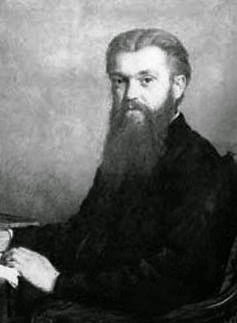
If you are someone who is waiting for evidence to justify your beliefs in and practicing of Mormonism, take a few minutes with William Clifford's short essay "The Ethics of Belief". His beard is so prophetic!

Tuesday, December 2, 2014

Zion's Camp


Throughout my life as a believing Mormon I never understood why we ever had Sunday School lessons on Zion's Camp, Joseph Smith's failed military effort of 1834 to regain lost lands in Missouri. It was always presented as a wonderful example of the Lord trying his people and having to change plans because they weren't obedient enough, and yet when I heard the story I couldn't help but notice a certain discomfort afterwords because Zion's Camp is so clearly a sloppy, uninspired effort put together by a leader who was desperate to keep his followers happy.

Seriously, read it. Read the inspiring version for adults, read the inspiring version for children, watch the corny movie version or read the Wikipedia version. They all conclude with Joseph's prophecy falling flat on its face. No fighting took place and yet more Mormons died than Mormon enemies. What the hell is that?

Is it OK that I've been confused for so long?

Friday, October 31, 2014

Polygamy - empty explanations


In addition to God needing believing babies, the early saint's apparently needed learn some shit the hard way.

Church leaders taught that participants in plural marriages should seek to develop a generous spirit of unselfishness and the pure love of Christ for everyone involved. (See here.)

Why was polygamy the preferred didactic method for teaching "the pure love of Christ"? I have no clue. Back in Jesus' day his approach was telling people to give all they had to the poor and not judging and stuff like that. The Church seems to be suggesting that God doesn't really care or want us to understand his motives.

Like the participants, we “see through a glass, darkly” and are asked to walk by faith. (See here.)

The only real important thing is that we believe God will give us something for our efforts:

They believed it was a commandment of God at that time and that obedience would bring great blessings to them and their posterity. (See here.)

We view our current polygamous practices the same way.

[T]he Church permits a man whose wife has died to be sealed to another woman when he remarries. Moreover, members are permitted to perform ordinances on behalf of deceased men and women who married more than once on earth, sealing them to all of the spouses to whom they were legally married. The precise nature of these relationships in the next life is not known, and many family relationships will be sorted out in the life to come. (See here.)

In other words, we don't know what the fuck we're doing or why exactly we're doing it, but we trust it's from God and we trust that he'll sort all this shit out even though it's absolutely absurd. Considering all the sealing combinations we've tried out (and the probability that many of those sealed souls won't even make it to Celestial glory), it's safe to say the tapestry of eternal families we've woven will look something like this:


Keeping sealing, dear Saints, but whatever you do do not stop to consider the idea that Joseph Smith made this all up so he could take advantage of several women (and girls).

Sunday, October 12, 2014

The "M" word


I have to admit I get annoyed whenever I see Mormons become defensive over the use of the word "Mormon". You see comments pop up like "That's not the name of the Church!" "Why don't you do your research!" or "It's just a nickname btw!" Getting the name of the Church wrong or referring to its members incorrectly means everything that uninformed individual said is incorrect and probably anti-Mormon. Never mind that latter-day saints do in fact refer to the Church as the "Mormon Church" and don't colloquially refer to members of the Church as saints. They only very rarely refer to members as saints and when they do it's typically heard in the expression "the early saints" which is kind of weird considering that those "early" folks were pretty sure they were all latter-day and shit.

Members of the LDS Church call themselves Mormons, I promise. We can say "Mormon" but everyone else had better mind the "M" word! But I have to admit that as an active member I definitely thought it was a smart move when the LDS Church started insisting more and more that people use its official name. (Although I also thought it would have made more sense had they  emphasized that they had wanted to be called the Church of Jesus Christ, not the LDS Church, but whatever.)

Who cares? What's the big deal? All groups have insider-outsider language, right?

Probably, yes. What I found (and still find) disturbing, however, is the way in which Mormons look for tiny mistakes in the things outsiders say in order to dismiss their arguments while going to great lengths to dismiss or ignore mistakes and inconsistencies made by their leaders. The tradition goes all the way back to Joseph Smith (but I don't believe Tom's had the same kind of slip ups as Gordon).

Jesus warned against this scenario (if you're into Jesus).

Why is this OK? Why do the prophets get a free pass on bad information while everyone else gets hosed for simple and often superficial mistakes?

Monday, October 6, 2014

Russ Ballard criticized

Here's a little something from the internet about Russell Ballard's recent Conference address.


I'm not 100% cool with this meme. I don't like how it decontextualizes Russell's metaphor. I also think his metaphor is ridiculous. Insisting on life's dangerous rapids is a scare tactic. He's essentially saying "life might be good now, but don't leave the Church because the rapids will surely getcha!"

Then again, this meme might be okay if we move onto his second water vessel metaphor. Stop and think about who exactly is powering "the Old Ship Zion".

Friday, October 3, 2014

Tom Monson criticized


The first teachings that come to mind when I reflect on the messages of the current LDS prophet, Thomas Monson, have to do with being present in others' times of need and carefully attending to the duties of service. I don't find much fault in any of that. I think it would be wonderful if we all tried to pay more attention to others and offer whatever assistance we are capable of.

But Tommy's also said plenty of bullshit. Here's an example that fits nicely within the general scope of this blog:

Remember that faith and doubt cannot exist in the same mind at the same time, for one will dispel the other.


Should doubt knock at your doorway, just say to those skeptical, disturbing, rebellious thoughts: “I propose to stay with my faith, with the faith of my people. I know that happiness and contentment are there, and I forbid you, agnostic, doubting thoughts, to destroy the house of my faith. I acknowledge that I do not understand the processes of creation, but I accept the fact of it. I grant that I cannot explain the miracles of the Bible, and I do not attempt to do so, but I accept God’s word. I wasn’t with Joseph, but I believe him. My faith did not come to me through science, and I will not permit so-called science to destroy it.”


May you ever frame your life with faith.


Did you catch all of that? The appeal to tribalism? The denigration of agnosticism? The plea to stop thinking critically about natural history, scripture and Church history? The encouraged distrust in science? This is God's message to us today? This is what he wants to tell the world? Not a fucking chance.

Take the time to doubt brother Tommy, dear brothers and sisters, if only for a day or two.

Tuesday, September 30, 2014

Russ Nelson criticized


Honestly Russell Nelson irks the shit out of me. I know that will come as no surprise, but let me just say (again) that I lost all faith in the man when he took the time to make a really shitty jab at the Big Bang in General Conference a couple of years ago.


The saddest part of watching Russell on that fateful day was hearing the thousands of people in the congregation snickering along with the joke. God save us!

Russ, get a fucking education.

Tuesday, September 23, 2014

Henry Eyring criticized


I like Henry. He seems like a pretty nice guy, and not because he's the most teary-eyed of the GAs. I only have one criticism specific to him - I wish he'd shut the hell up about his father the Mormon badass chemist.


Note to Henry B:

Henry, listen, you're dad was quite a guy, but here's your problem: you conflate your father's authority in science with his lack of authority with regards to spiritual realities. In other words, just because you're dad was a good scientist and a devout believer doesn't give his belief the same weight of his scientific research. No more of this "Hey, my dad was smart and still believed, so it must be true" bullshit. Listen, you've got a BS in physics and you're a fucking apostle of the big JC. Put it all together for us. Show us how it works in more than a mere 100 pages that essentially say "Embrace the mystery!"

Thank you.
Be well.
Abe

Thursday, September 11, 2014

Rationalizing warnings

The second set of groupthink symptoms fall under "Closed-mindedness". This involves "rationalizing warnings that might challenge the group's assumptions". 


This entire blog is about how I and others rationalized warnings. For a time I rationalized every problem I encountered with LDS doctrine and tried to keep confrontation at bay for as long as possible. The Church just had to be true. Had to. 

The message was, and still is: don't worry about it now! All questions will be answered after death. All problems solved. All doubts resolved. Believe on.